Problem: You Suspect a Slab Leak But Cannot See Where It Is
Slab leaks hide under 4 to 6 inches of concrete, so by the time you notice symptoms, water has already been migrating for days or weeks. The classic signs in Heritage Lake homes are a water bill that jumped 30 to 50 percent with no explanation, the sound of running water when nothing is on, warm spots on floors from a hot water line leak, cracked or buckling flooring, or a musty smell near baseboards. Some homeowners only realize what is happening when carpet edges feel damp or grout lines start darkening. In older Heritage Lake neighborhoods with copper supply lines installed before 1990, pinhole leaks from electrolysis are especially common, and they often start on the hot water side first because heat accelerates the corrosion.
Solution: Non-Invasive Leak Detection That Pinpoints the Source
We do not start by jackhammering your floor. We start with electronic acoustic listening equipment, thermal imaging cameras, and tracer gas detection to locate the leak within a few inches before any concrete gets touched. A proper detection visit in Heritage Lake usually takes 1 to 3 hours and runs between $300 and $700 depending on home size and slab access. Once we mark the exact spot, you have real options: spot repair, reroute the line, or repipe. We coordinate with a licensed plumber to handle the pipe work while our team focuses on the water damage side. For a deeper look at finding leaks you cannot see, our guide on hidden leak detection behind walls covers the same equipment we use for slab work.
Solution: Controlled Concrete Cuts and Proper Restoration
A typical access cut is 2 to 4 feet long and 12 to 18 inches wide. We contain the work area with plastic and negative air to keep concrete dust out of the rest of your Heritage Lake home, then after the pipe repair we backfill with proper base material, pour new concrete, and reinstall flooring. The total cost for cut, repair, and patch usually falls between $1,500 and $4,000, with another $500 to $3,000 for flooring depending on what you have. Insurance typically covers the resulting water damage and access work even when the leak itself is not covered, which is one of the most misunderstood parts of these claims. When reroute is an option, it often makes more sense financially because it avoids the slab cut entirely and gives you a fresh PEX line that will outlast the original copper.
Problem: The Concrete Itself Has to Be Cut and Patched
If your plumber needs to access the pipe directly rather than reroute it overhead through the attic, the slab has to be cut. This is where homeowners panic, because the idea of a saw cutting through their foundation sounds catastrophic. It is not, when it is done correctly.
Solution: Targeted Extraction and Structural Drying
We use moisture meters and thermal cameras to map every wet area, then deploy a drying plan built for the specific materials in your home. That typically includes:
- Extracting any standing or trapped water using truck-mounted or portable units, including water sitting under vinyl plank or laminate.
- Setting up commercial air movers and LGR dehumidifiers sized to the affected square footage, usually one dehu per 500 to 800 square feet of wet area.
- Drilling small inconspicuous holes in baseboards or cabinet toe-kicks to push dry air into wall cavities without tearing out drywall when we do not have to.
Most slab leak drying jobs in Heritage Lake run 3 to 5 days with daily moisture readings. If your flooring is hardwood, the timeline and decision process changes, and our breakdown on saving versus replacing hardwood floors walks through what is actually salvageable.
Problem: Water Has Already Saturated Your Subfloor and Walls
By the time most Heritage Lake homeowners call, the leak has been running long enough that moisture has wicked up into the bottom plates of walls, into cabinet kickplates, and across the subfloor. Standard household fans will not fix this. The water is trapped between layers, and surface drying leaves a moisture pocket that breeds mold within days. We frequently find that the visible wet spot is only 20 to 30 percent of the actual affected area, with the rest hidden under cabinets, behind tile, or two rooms away where the slab slopes.
Problem: Mold Is Already Starting in Hidden Areas
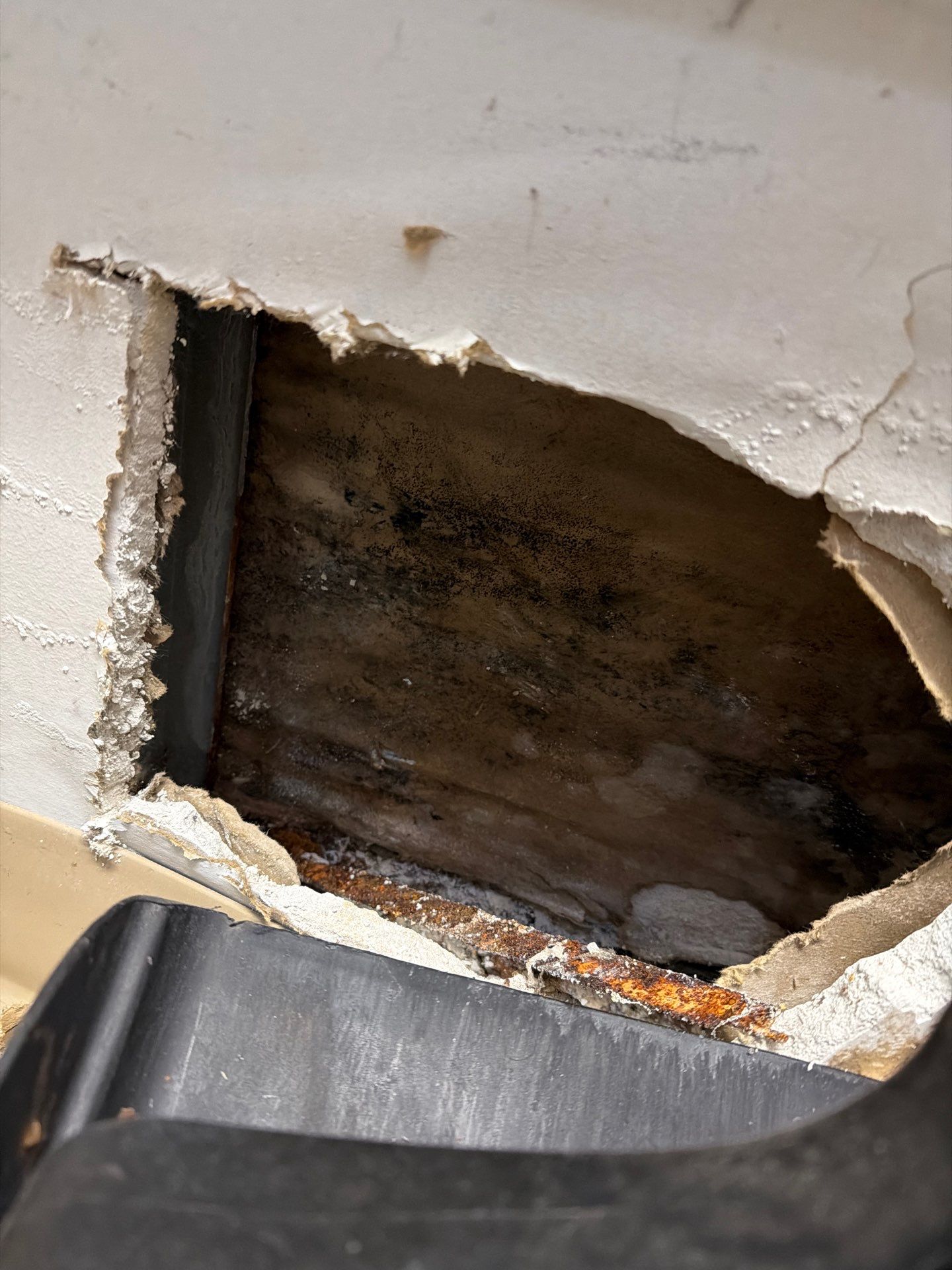
If your slab leak has been running for more than a week, you likely have early mold growth somewhere you cannot see, often inside wall cavities or under cabinet bases. Drying alone will not remove it.
Solution: Antimicrobial Treatment and Containment
After extraction and during drying, we apply EPA-registered antimicrobials to affected surfaces and, if active mold is found, build containment with negative air and HEPA filtration before any removal. Catching it during the water damage phase costs a fraction of what full mold remediation runs later, often the difference between a few hundred dollars in preventive treatment and a five-figure remediation project once spores have colonized framing and insulation.
Problem: You Do Not Know What Insurance Will Pay For
Most Heritage Lake homeowners assume their policy either covers everything or nothing. The reality sits in the middle, and the wording matters. Terms like "sudden and accidental," "long-term seepage," and "access coverage" each trigger different parts of your policy, and how the loss is described in the first 48 hours often decides what gets approved.
Solution: We Document the Claim the Way Adjusters Expect
Standard HO-3 policies in Indiana usually exclude the pipe repair itself but cover sudden and accidental water damage caused by the leak, plus the tear-out needed to reach the pipe. We document moisture mapping, photos, IICRC category and class assignments, and itemized scope using Xactimate so your adjuster has what they need without back-and-forth. Heritage Lake Water Restoration has handled enough of these claims in Heritage Lake to know which carriers push back on what, and we adjust documentation accordingly. For homeowners who want the bigger picture on pricing before approving any work, our complete water damage cost breakdown lays out typical ranges line by line.